How Does Generational Memory Distort Our Understanding of Climate Extremes?
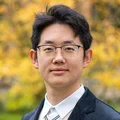
Shuang Song
DOI:
https://doi.org/10.21036/LTPUB101257Researcher
Dr. Shuang Song is a postdoctoral researcher at the Max Planck Institute of Geoanthropology, where he leads the COFLAB project on human-water interactions in the Yellow River Basin, China. His research focuses on the long-term co-evolution of water management and human society, employing social-ecological modeling and agent-based simulations. Song earned his PhD in Physical Geography from Beijing Normal University in 2023 and holds a B.S. in Physical Geography and a second major in History from Sun Yat-Sen University. He previously held a postdoctoral position at Beijing Normal University and has published extensively on socio-environmental systems.
Original Publication
Archival and palaeoenvironmental documentation of extreme climate events reveals generational amnesia in collective memory
Shuang Song,
Bo Hu,
David Max Findley,
Xutong Wu,
Wei Liu,
Published inBook Recommendation
Compass
M. Enard
As night falls over Vienna, Franz Ritter, an insomniac musicologist, takes to his sickbed with an unspecified illness and spends a restless night drifting between dreams and memories, revisiting the important chapters of his life as an Orientalist.
Citation
Shuang Song,
Latest Thinking,
How Does Generational Memory Distort Our Understanding of Climate Extremes?,
https://doi.org/10.21036/LTPUB101257,
Credits:
© Shuang Song
and Latest Thinking
This work is licensed under CC-BY 4.0