Which Chemical Traits Protect the Roots of Dandelions Against Insect Damage?

Plants use certain chemical compounds to defend themselves against animals that feed on them. As JONATHAN GERSHENZON explains in this video, dandelions are a very good model to research the defences of plants because they are especially robust. The research team therefore investigated dandelions to identify the compound that protects the roots from being damaged by insects. They studied dandelions from different regions and with different levels of these particular compounds. In a next step they compared the amount of damage after exhibiting them to an insect that feeds on the roots. After altering the plant's production of this compound the researchers found that dandelions with reduced levels of the compound were fed on more heavily by this particular insect.

DOI:

https://doi.org/10.21036/LTPUB10219

Researcher

Jonathan Gershenzon is Director of the Department of Biochemistry at the Max Planck Institute for Chemical Ecology and Honorary Professor at Friedrich Schiller University, both Jena, Germany. Before joining the Max Planck Society, he worked as a scientist at the Institute for Biological Chemistry, Washington State University in Pullman. Gershenzon studies the biochemistry of plant defenses, focusing on two major groups: glucosinolates and terpenoids. In 2013, he was elected into the American Association for the Advancement of Science and listed as one of the Most Cited Authors in Plant Sciences in Europe by Lab Times.
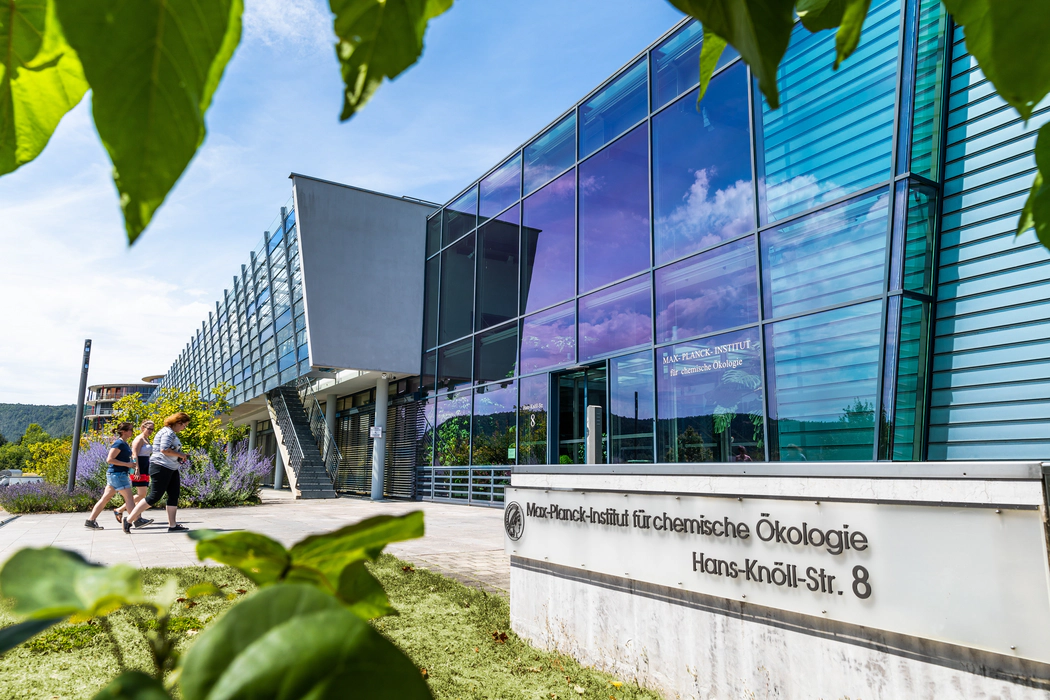
Max Planck Institute for Chemical Ecology

The Max Planck Institute for Chemical Ecology (MPI-CE) investigates how organisms communicate with each other via chemical signals. We study how plants best adapt to their respective environments and identify the chemical compounds they produce to attract pollinators, fend off herbivores and pathogens, or keep unpleasant competitors away. In the course of evolution, insects have adapted to the survival strategies of plants. We therefore analyze the genetics, physiology and behavior of herbivorous insects. Insects also make use of plant substances to protect themselves against predators: They sequester toxic compounds; some insects even signal by exhibiting their bright colors that they should better not be eaten. Microorganisms play a crucial role in the fitness of plants and insects. Some are pathogens, others are symbiotic partners and help to supply nutrients or boost the immune system. We want to determine who plays which role. The MPI-CE was founded in 1996 and is part of the Max Planck Society. Together with Friedrich Schiller University Jena, it runs the International Max Planck Research School Chemical Communication in Ecological Systems, a graduate school for excellent international graduates.

Max Planck Institute for Chemical Ecology

Original Publication

A Latex Metabolite Benefits Plant Fitness under Root Herbivore Attack

Meret Huber

,

Janina Epping

,

Christian Schulze Gronover

,

Julia Fricke

,

Zohra Aziz

,

Published in 2016