Is There a Relationship Between Anti-Trust Law, Economic Growth, and Democratic Development?

By means of a panel data analysis presented in this interview, NIELS PETERSEN explores the relation between anti-trust institutions, the level of democracy, and economic development. Panel data from 154 states dating from 1960 to 2005 cannot substantiate a positive relation between the existence of anti-trust law and democratic development; the empirical findings even suggest that there is only a weak link between anti-trust law and economic growth.

DOI:

https://doi.org/10.21036/LTPUB10006

Researcher

Niels Petersen is a Professor of Public Law, International Law and EU Law at the University of Muenster and a Research Affiliate at the Max Planck Institute for Research on Collective Goods in Bonn (Germany). His research interests are law and social sciences, international law, comparative constitutional law and constitutional theory as well as antitrust law. He was a Hauser Research Scholar and Emile Noël Fellow at the New York University School of Law.
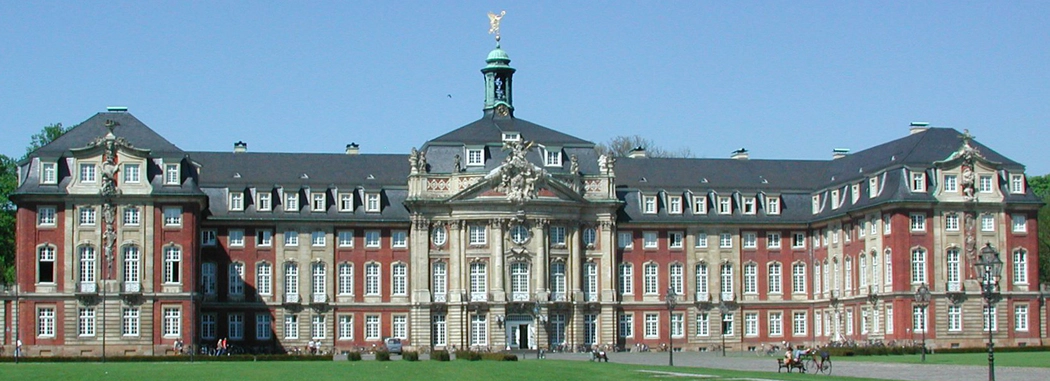
University of Münster (Westfälische Wilhelms-Universität Münster)

Founded in 1780, the WWU Münster is a university with tradition. 250 courses of study, 43,000 students, a staff of 5,850 including 590 professors - as well as 550 partnership agreements with universities and other academic institutions all over the world. Münster University has developed a strong research profile in natural sciences, humanities, medicine, law and business administration. It targets top-level research in high-performance areas and combines this with promoting first-class junior research staff. (Source: WWU)

University of Münster (Westfälische Wilhelms-Universität Münster)

Original Publication

Antitrust Law and the Promotion of Democracy and Economic Growth

Niels Bjørn Grund Petersen

Published in 2013