How Is the UNESCO World Heritage Title Being Awarded and What Are Its Consequences?
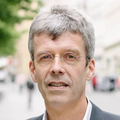
The UNESCO World Heritage title has become a powerful global brand. It influences people’s decisions of where to travel and conveys prestige and national pride. CHRISTOPH BRUMANN and his research group investigated how this title is being awarded and what its consequences are on the ground at the chosen sites. Brumann explains in this video that using a two-fold anthropological approach, the researchers found that, since 2010, national interests have become the guideline for the UNESCO World Heritage Committee decisions, often brushing aside expert advice. On the local level, they discovered that communities often had little influence on the management of the sites and that these were rather maintained in the line of national interests. These findings suggest an unexpected assertion of national interests in contrast to global institutions’ advice.
DOI:
https://doi.org/10.21036/LTPUB10429Researcher
Christoph Brumann is head of a research group at the Max Planck Institute for Social Anthropology. Further, he is Honorary Professor of Anthropology at the Martin Luther University Halle-Wittenberg. Previous positions include that of Heisenberg Fellow of the German Research Foundation, from 2008 to 2010; and, from 2009 to 2012, President of the German Association for Social Science Research on Japan. In 2013, he became member of the Academia Europaea. His research focus lies, among other subjects, on urban anthropology, traditions and cultural heritage, and international organisations.
Max Planck Institute for Social Anthropology
The Max Planck Institute for Social Anthropology is one of the world’s leading centres for research in socio-cultural anthropology. Common to all research projects at the Max Planck Institute is the comparative analysis of social change; it is primarily in this domain that its researchers contribute to anthropological theory, though many programmes also have applied significance and political topicality. Fieldwork is an essential part of almost all projects.
Original Publication
World Heritage on the Ground: Ethnographic Perspectives
Christoph Brumann
,David C. Berliner
Published in 2016
Shifting Tides of World-making in the UNESCO World Heritage Convention: Cosmopolitanisms Colliding
Christoph Brumann
Published in 2014