How Do Seagrasses Control Methane Emissions from Coastal Marine Environments?

Sea grasses play an important role in the global carbon cycle. In this video, SINA SCHORN investigates the mechanisms by which the Mediterranean sea grass Posidonia oceanica stores carbon while emitting methane. Employing methods including flex measurements and substrate addition experiments, among Schorn’s most important findings is the fact that sediments in which sea grasses have died off can continue to emit methane for decades. This research thus highlights the importance of preserving sea grasses while providing the methodological foundation for further work on other sea grass species.

DOI:

https://doi.org/10.21036/LTPUB101038

Researcher

Sina Schorn is a postdoctoral researcher at the Max Planck Institute for Marine Microbiology where she is part of the Greenhouse Gases Research Group. Having previously studied at the University ofOldenburg (M.Sc.) and attheUniversity ofWürzburg (B.Sc.), she completed her PhD at the Max Planck Institutein 2021. Her research centers on the activity and presence of methane-oxidizing bacteria in aquatic environments with low oxygen concentrations.Schorn’s research has been published in journals including Nature (2021) and Microbial Ecology (2018, 2020).
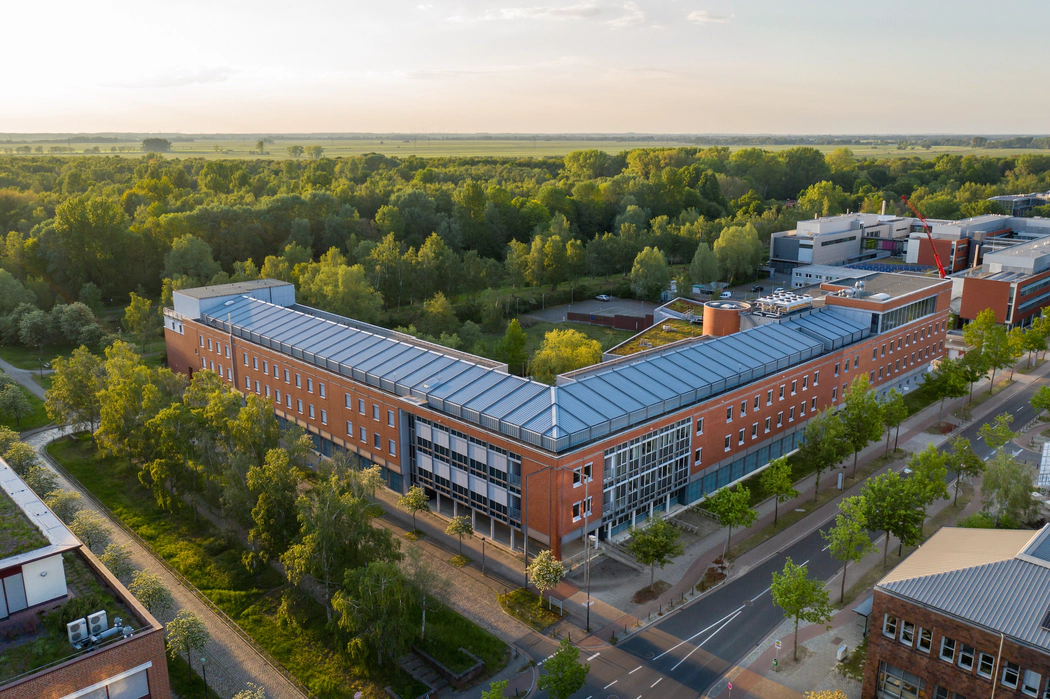
Max Planck Institute for Marine Microbiology

At the Max Planck Institute for Marine Microbiology (MPIMM), we are investigating microorganisms in the sea and other waters. What role do they play, what are their characteristics and how great is their biodiversity? What is the contribution of microorganisms to the global cycles of carbon, nitrogen, sulfur and iron? What does this mean for our environment and our climate? These and many other questions will be answered by researchers from around the world, engineers, technicians and numerous others at the MPIMM. Their fields of expertise range from microbiology to microsensors, geochemistry to genome analysis and molecular ecology to modelling. The MPIMM was founded in 1992 and is part of the Max Planck Society (MPG). Since 2002, the MPIMM has been running the International Max Planck Research School of Marine Microbiology ( MarMic ), a program for highly qualified master students and graduates of our institute and the Bremen Research Alliance partner Bremen University, Alfred Wegener Institute Helmholtz Center for Polar and Marine Research ( AWI ) and Jacobs University.

Max Planck Institute for Marine Microbiology

Original Publication

Diverse Methylotrophic Methanogenic Archaea Cause High Methane Emissions From Seagrass Meadows

Sina Schorn

,

Soeren Ahmerkamp

,

Emma J. Bullock

,

Miriam Weber

,

Christian Lott

,

Published in 2022