How Can We Predict What Happens at an Event Horizon?

Every galaxy seems to have a supermassive black hole in its center. A black hole is defined as such because nothing can escape from a certain point inside, not even light. There is, however, a last stable orbit which is called the event horizon outside of which gas can still radiate away. This event horizon might be the key to understanding black holes and, therefore, observers are interested in resolving the event horizon to see what happens at it. As ANDREAS BURKERT explains in this video, his theoretical research group develops computational models based on the system of meteorologists to predict how a gas cloud would behave at the event horizon and in what time frame. They then check back with the observers and correct the models accordingly. These computational models thus assist the observers in understanding the events they see. This contributes to a better knowledge of black holes and, eventually, an increased understanding of the universe.

DOI:

https://doi.org/10.21036/LTPUB10432

Researcher

Andreas Burkert is Fellow at the Max Planck Institute for Extraterrestrial Physics and Full Professor and Chair of Computational Astrophysics at the University of Munich. Other current positions include that of Higgs Fellow and Vice-Coordinator of the Cluster of Excellence ‘Origin and Structure of the Universe’. From 2012 to 2014, he chaired the German Astrophysics Board of Directors. In 2006, he became a member of the European Academy of Art and Sciences. Burkert’s research focuses on dynamical processes in the universe, including the structure and formation of dark matter halos and the formation and evolution of galaxies. The International Astronomical Union (IAU) named a minor planet after him in 2011.
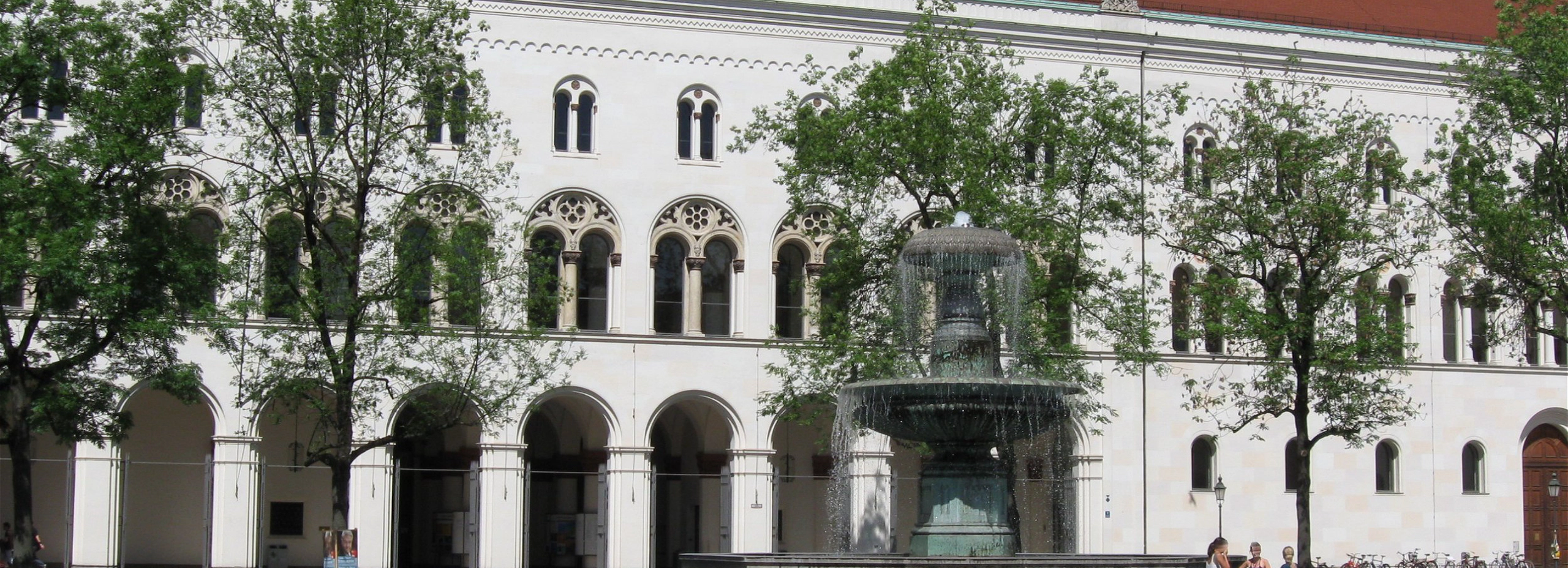
Ludwig Maximilian University Munich (Ludwig-Maximilians-Universität München)

"LMU Munich is one of the leading universities in Europe. Carrying on a tradition that goes back over 500 years, LMU offers challenging study programs and provides an ideal environment for top-level research. "Introducing LMU" gives an insight into learning and teaching as well as research and life at LMU." ( Source )

Ludwig Maximilian University Munich (Ludwig-Maximilians-Universität München)

Original Publication

A Gas Cloud on its Way Towards the Super-massive Black Hole in the Galactic Centre

S. Gillessen

,

R. Genzel

,

T. K. Fritz

,

Eliot Quataert

,

C. Alig

,

Published in 2011

Physics of the Galactic Center Cloud G2, on Its Way Toward the Supermassive Black Hole

Andreas Burkert

,

M. Schartmann

,

C. Alig

,

S. Gillessen

,

R. Genzel

,

Published in 2012

The Post-pericenter Evolution of the Galactic Center Source G2

P. M. Plewa

,

S. Gillessen

,

O. Pfuhl

,

F. Eisenhauer

,

R. Genzel

,

Published in 2017

3D AMR Hydrosimulations of a Compact Source Scenario for the Galactic Centre Cloud G2

Alessandro Ballone

,

M. Schartmann

,

Andreas Burkert

,

S. Gillessen

,

P. M. Plewa

,

Published in 2018