How Can We Historically Describe the Evolution of Knowledge and How Can We Account for It?
The history of science traditionally focuses on specific time periods or on scientists that made important discoveries. The research presented in this video by JÜRGEN RENN broadens the perspective and looks at the history of knowledge more generally. With the goal to investigate how knowledge evolves historically the researchers looked at it across time periods and disciplinary boundaries. By tracing three dimensions of knowledge, the cognitive, the material and the social dimension, they detect how each of them influences knowledge evolution. Among others they explain that cognitive structures are being formed by concrete practices and how the carriers of knowledge, be it books or digital media, influence the organization of knowledge and its further evolution.
DOI:
https://doi.org/10.21036/LTPUB10204Researcher
Jürgen Renn is Director of the Max Planck Institute for the History of Science and Honorary Professor at Humboldt University and Free University, Berlin. He is a member of the German National Academy of Sciences Leopoldina and affiliated with various international institutions, including Boston University. With a background in physics and mathematics, Renn is a leading researcher in the changing systems of scientific thought and physical knowledge. In his current research, Renn is particularly interested in looking at how different disciplines of knowledge production have contributed to the evolution of knowledge. Further, he seeks to dissect how this might differ under the influence of new media and across cultures. Beyond academic research, Renn has been involved in the Digital Humanities and Open Access Movement, as well as in drafting of the Berlin Declaration on Open Access to Knowledge in the Sciences and Humanities.
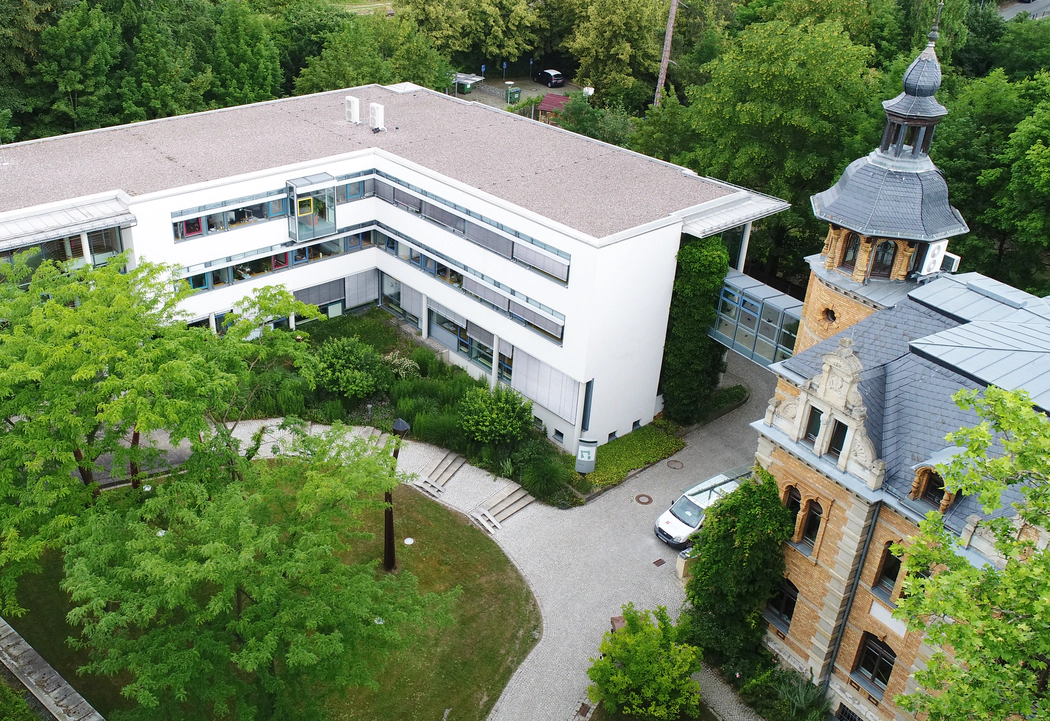
Max Planck Institute for Geoanthropology
The Max Planck Institute of Geoanthropology (MPI-GEA) focuses on the interrelationships between natural and human-made systems, looking into the deep past and distant future to examine how humanity has driven the emergence of the Anthropocene – the geological period in which human activities began significantly impacting our planet’s climate and ecosystems – and how we can still positively influence its course. The transdisciplinary research at MPI-GEA will bring together research areas represented by all three scientific sections of the MPG: Biology & Medicine; Chemistry, Physics and Technology; and Human Sciences. Corresponding inter- and transdisciplinary research projects concern, for example, planetary urbanisation, the global food system, and global material, energy and information flows.

Original Publication
The Globalization of Knowledge in History
Jürgen Renn
,Malcolm D. Hyman
Published in 2012