Did Religion Play a Causal Role in the Evolution of Large, Complex Societies?

The notion of a powerful god is often said to play a significant role in supporting the transition from small relatively equal hunter and gatherer societies to big hierarchical societies. However, as RUSSELL GRAY explains in this video, while there is a correlation between “big gods” and “big societies”, this is no causal relationship. By comparing the evolution of different forms of social organization in cultures with a common ancestry in the Pacific and Southeast Asia the researchers found that these societies grew bigger first and only then borrowed the notion of a powerful god through the influence of Muslim traders. Another result on the influence of religion is that ritual human sacrifice played a major role in maintaining or even promoting social inequality.
DOI:
https://doi.org/10.21036/LTPUB10216Researcher
Russell Gray is Director of the Max Planck Institute for the Science of Human History in Jena, Germany, as well as Adjunct Professor at the Research School of Social Sciences of the Australian National University in Canberra. His research covers the fields of linguistics, animal cognition, philosophy of biology and the evolution of human and animal behavior. He also pioneered the application of computational evolutionary methods to questions of linguistic prehistory. Russell is a Fellow of the Royal Society of New Zealand and has been awarded their Mason Durie Medal in 2012 “for his pioneering social science research on questions of fundamental relationships between human language, cognition and biology”.
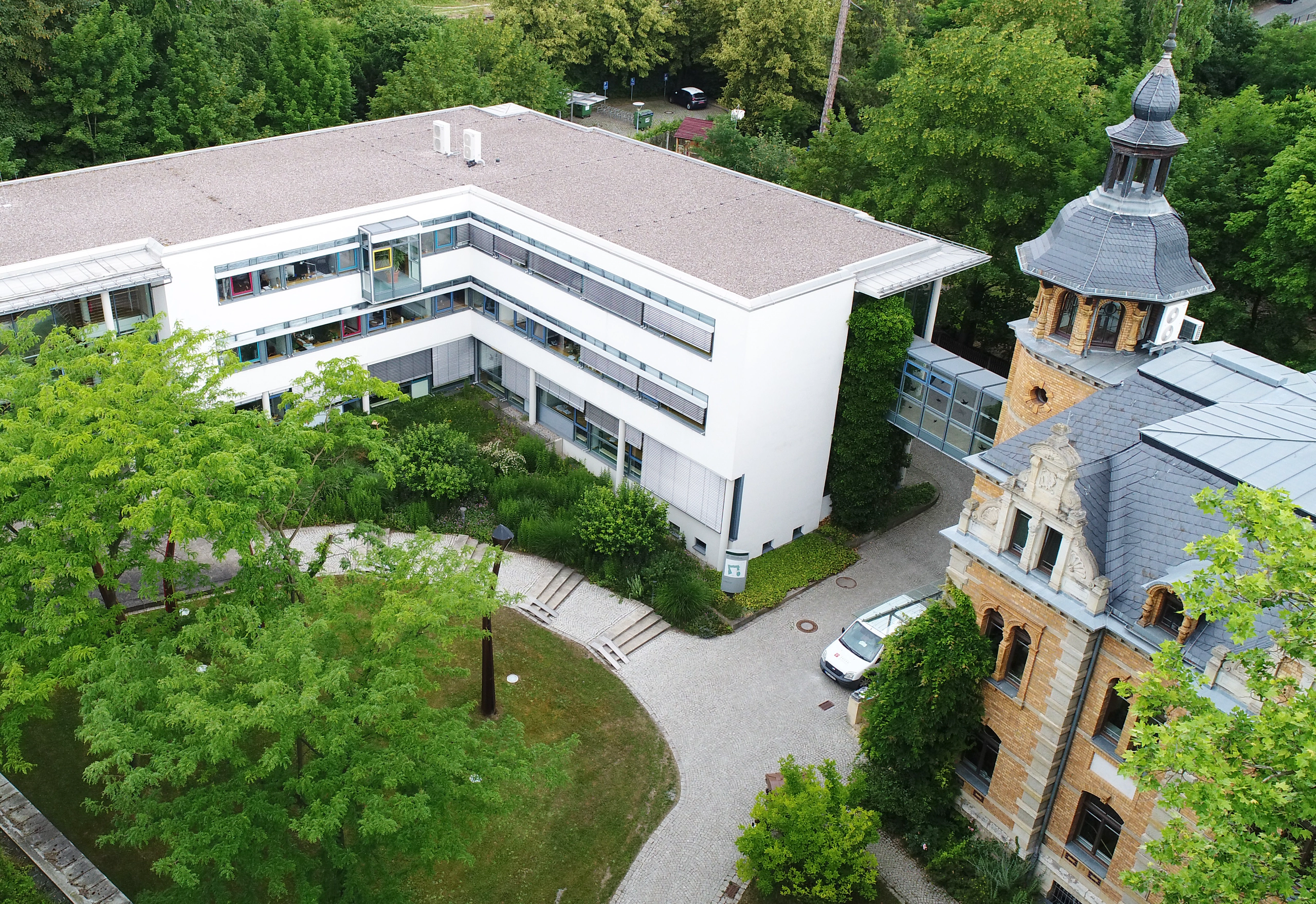
Max Planck Institute for Geoanthropology
The Max Planck Institute of Geoanthropology (MPI-GEA) focuses on the interrelationships between natural and human-made systems, looking into the deep past and distant future to examine how humanity has driven the emergence of the Anthropocene – the geological period in which human activities began significantly impacting our planet’s climate and ecosystems – and how we can still positively influence its course. The transdisciplinary research at MPI-GEA will bring together research areas represented by all three scientific sections of the MPG: Biology & Medicine; Chemistry, Physics and Technology; and Human Sciences. Corresponding inter- and transdisciplinary research projects concern, for example, planetary urbanisation, the global food system, and global material, energy and information flows.

Original Publication
Ritual Human Sacrifice Promoted and Sustained the Evolution of Stratified Societies
Joseph Watts
,Oliver Sheehan
,Quentin D. Atkinson
,Joseph Bulbulia
,Russell D. Gray
Published in 2016